
Connemara National Park: Best Hikes in the Twelve Bens
There is a moment on the upper slopes of Diamond Hill when the wind drops, and you realise you are standing on quartzite rock that has seen every Atlantic storm for four hundred million years. Below you, the patchwork of Connemara unfolds in shades of ochre and violet — blanket bog, granite peaks, and the sudden silver flash of a lough catching the light. To the west, Inishbofin and Inishark float on the horizon like ghosts of the old world. This is not a landscape that reveals itself quickly. It withholds. It rewards patience. For walkers who have already tasted Ireland's more famous trails, Connemara National Park offers something rarer: silence on a scale that makes you aware of your own footsteps.
For travellers building a broader walking itinerary, Hiking in Ireland: The Complete Guide to Trails, Walks & Long-Distance Treks covers every major route in the country, from coastal cliff paths to long-distance mountain traverses. But Connemara sits apart. It is not a through-route like the Western Way: Walking Ireland's Quietest Long-Distance Trail, which passes nearby. It is a place you return to, a pocket of wild Galway where the Twelve Bens keep their own weather and their own time.
What Makes Connemara National Park Different from Other Irish Trails

Most Irish national parks protect a single dramatic feature — a lake system, a mountain corrie, a cliff face. Connemara protects a way of land. The park covers over 2,000 hectares of Atlantic blanket bog, wet heath, native woodland, and the lower slopes of the Twelve Bens, but its boundaries feel almost arbitrary. The wildness does not stop at the fence. It simply continues, westward to the coast at Letterfrack and southward toward Recess and Maam Cross. What you are walking through is a cultural landscape as much as a natural one. The stone walls that thread across the lower ground were built by hands that understood how to clear a field without wasting a single rock. The abandoned potato ridges on the hillsides speak of nineteenth-century resilience in soil that barely supports life.
The ecology is equally specific. Connemara's blanket bog is a living archive. Sphagnum moss holds water like a sponge, creating a surface that quivers underfoot and releases the scent of earth and iron with every step. In late summer, the heather turns the hillsides deep purple, and the bog cotton trembles in the breeze like scattered snow. The park is home to Connemara ponies, red deer, and birdlife that includes the rare merlin and peregrine falcon. For a diaspora walker, there is an added layer: many of the townlands here fed the emigrant ships. The land your ancestors left may well have looked like this — marginal, beautiful, and unforgiving.
Diamond Hill Loop: The Best Introduction to the Twelve Bens

If you have only one day in Connemara National Park, spend it on Diamond Hill. The loop trail begins at the visitor centre in Letterfrack, climbing gradually through oak and birch woodland before emerging onto open mountainside. The lower section is well-engineered, with stone steps and boardwalks protecting the bog from erosion. It is accessible enough for families with older children, but do not mistake accessibility for tameness. The mountain makes you work.
At roughly the halfway point, the trail splits. The lower loop turns back toward the valley, offering gentle views of Tully Mountain and the coastline. The upper loop continues, and here the character changes. The boardwalk gives way to rougher ground, and the gradient steepens as you climb toward the summit at 445 metres. The final push is on exposed quartzite — slippery when wet, and it is often wet. But the reward is one of the finest panoramic views in the west of Ireland. On a clear day, you can trace the full spine of the Twelve Bens, count the islands of Ballynakill Bay, and pick out the neo-Gothic silhouette of Kylemore Abbey in its valley to the east. The return leg descends the southern flank, passing abandoned cultivation ridges that remind you how close wilderness and human effort sit in this landscape.
Meet a Local Guide
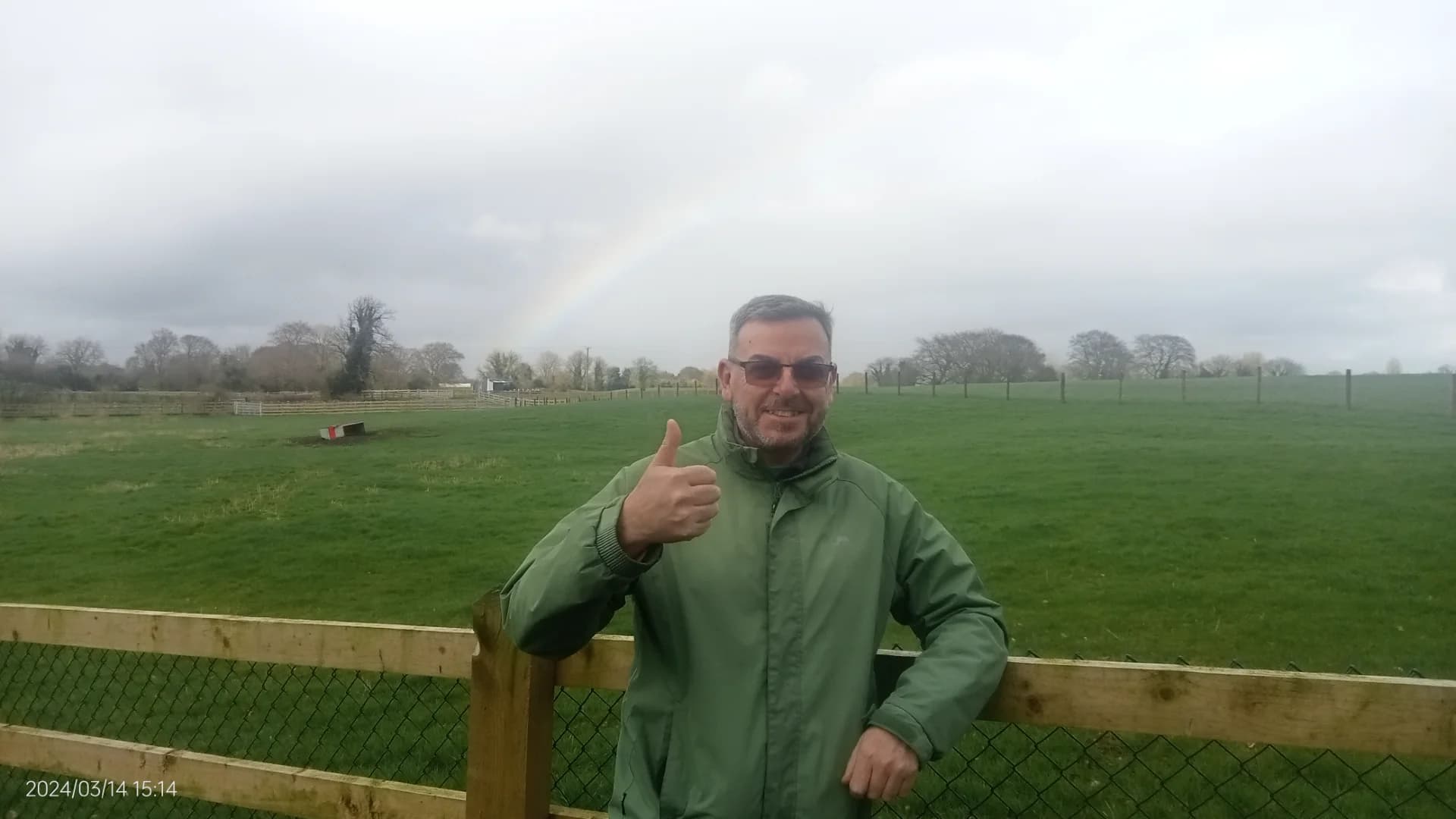
Hi Folks,
The Upper Diamond Hill Trail: A Steeper Challenge with Panoramic Rewards

For walkers with solid fitness and a tolerance for exposure, the upper trail on Diamond Hill delivers a more concentrated version of the loop experience. This is not a separate mountain, but the higher option on the same route — and it makes a significant difference. The climb from the trail junction to the summit gains nearly 200 metres in just over a kilometre, much of it on uneven steps cut into the quartzite. When the Atlantic wind hits the exposed ridge, you will understand why the park advises checking conditions before setting out.
The summit itself is a bare whaleback of rock, barely wide enough for a few walkers to stand comfortably. But the view is encompassing. To the north, the Inishbofin archipelago sits in a sea that shifts from turquoise to pewter depending on the cloud cover. To the south and east, the Twelve Bens rise in a jagged line — Benbaun, Bencorr, Derryclare — their names in Irish as sharp as their profiles. On the very best days, when the air clears after a front has passed, you can see the Maumturk Mountains twenty kilometres to the east, and the faint outline of the Aran Islands far to the south. The descent requires care; wet quartzite has little grip, and the steps can feel more like a ladder than a path in places. Trekking poles are worth carrying.
Woodland and Bog: The Hidden Trails of Letterfrack

Not every worthwhile walk in Connemara National Park involves climbing. The Woodland Nature Trail and Sruffaunboy Nature Trail, both starting near the visitor centre, offer a slower, more intimate encounter with the landscape. These are loops of two to three kilometres, graded easy, but they are not afterthoughts. The woodland here is one of the largest remaining fragments of native oak forest on the Atlantic seaboard. Sessile oak dominates, twisted by the wind into shapes that seem older than the stones around them. Beneath the canopy, ferns and mosses thrive in the damp shade, and the air carries the mineral smell of decomposing leaf litter.
The bog section of the Sruffaunboy Trail is particularly instructive for visitors unfamiliar with Irish peatland. A boardwalk carries you across the surface without damage, and interpretation panels explain the ecology: how sphagnum moss acidifies the water, how carnivorous plants like sundew supplement poor soil by trapping insects, how the bog stores carbon on a scale that matters to the climate. For heritage seekers, there is a human dimension too. The bog was once a source of winter fuel, and old cutting faces are still visible at the edges of the reserve. These short trails are ideal for the day you arrive, when your legs are still tired from the flight, or for the afternoon after a morning summit, when you want to absorb detail rather than distance. They also serve as a reminder that The Beara Way: Ireland's Most Underrated Peninsula Walk and Connemara share this same Atlantic bog ecology, though the Beara routes are wilder and less managed.
When to Hike Connemara: Weather, Light, and the Atlantic Seasons


Connemara does not do reliable weather. It does interesting weather. The park sits directly in the path of prevailing Atlantic systems, which means conditions can shift four times before lunch. That said, certain patterns hold. April through June offers the longest days, the driest ground underfoot, and the purple haze of flowering heather beginning to build on the lower slopes. July and August bring warmer temperatures but also more cloud cover and midges — the tiny biting flies that thrive in still, damp air. September and October are the sweet spot for many experienced walkers: the summer crowds thin, the light turns golden, and the first storms of autumn clear the air to crystal transparency.
Winter walking is possible but demands respect. The Twelve Bens can hold snow on their upper slopes from November to March, and the wind chill on exposed quartzite can drop temperatures below freezing even when the valley feels mild. The visitor centre at Letterfrack reduces its hours in winter, and some of the higher trail markers may be obscured by snow. If you are considering a winter ascent of anything beyond the woodland trails, check the Mountain Weather Information Service forecasts for Connemara and carry full winter protection. The days are short — sunset can fall before four in the afternoon — and navigation in cloud on featureless bog is not a place for beginners.
What to Bring for a Day Hiking in Connemara National Park
The old Irish saying about four seasons in one day was coined for places like this. Your pack should reflect that reality. Waterproof boots with ankle support are non-negotiable; the bog will find any weakness in your footwear within the first kilometre. Layered clothing is essential: a moisture-wicking base, a fleece or light synthetic mid-layer, and a hard shell jacket that can withstand horizontal rain. Even on a warm August day, the temperature can drop fifteen degrees when you gain the ridge.
Trekking poles reduce strain on the knees during the steep descent from Diamond Hill and provide stability on wet rock. Carry a physical map — the Ordnance Survey Discovery Series Sheet 37 covers the area — and do not rely solely on phone signal, which is patchy in the valleys and non-existent on the higher ground. Water is available from streams on the mountain, but purification is advisable. Food should be dense and packable; there is no café on the trail, and the visitor centre catering closes early in the off-season. Sun protection is easily forgotten in Ireland but necessary: the UV index on exposed quartzite can be surprisingly high, and there is no shade above the treeline.
Why You Need a Local Guide for Connemara National Park

A guidebook will get you up and down Diamond Hill. What it will not give you is the context that makes the place legible. A local guide knows which stream crossing becomes impassable after heavy rain, and which unmarked path on the eastern flank of the Twelve Bens leads to a prehistoric wedge tomb that never made it onto the official maps. They can tell you why the forestry plantations failed here in the 1950s, or point out the difference between the two types of heather that turn the hills purple in August. Most importantly, they understand the weather patterns. The cloud that looks harmless from the visitor centre may be carrying sixty-kilometre-an-hour winds on the upper ridge, and a guide who has watched Atlantic fronts approach this coastline for decades can read that sky in ways no app can replicate.
For diaspora walkers tracing family roots, a guide adds another dimension entirely. Many of the local guides in the Letterfrack and Clifden area have lived through the same cycles of emigration and return that shaped their grandparents' generation. They can place you in the landscape not just as a visitor, but as someone connected to it. A private driver guide for Connemara is not a luxury on these trails — it is the difference between walking through a postcard and understanding what you are walking through.
For those planning a Connemara walking holiday, explore our full selection of hiking tours in Ireland for guided experiences across the west.
Frequently Asked Questions
How difficult is the Diamond Hill walk?
The lower loop is moderate and suitable for most walkers with reasonable fitness, including families with children over about eight years old. The upper trail, which reaches the true summit, is more demanding — steep in sections, exposed to wind, and slippery after rain. Allow two to three hours for the full upper loop, and longer if you stop frequently for photographs or rest breaks.
Are dogs allowed in Connemara National Park?
Dogs are permitted in the park but must be kept on a lead at all times. This rule is strictly enforced to protect ground-nesting birds, sheep on neighbouring farmland, and the fragile bog vegetation. The park advises that dogs are not suitable for the upper Diamond Hill sections due to the steep quartzite and exposure.
Is there an entrance fee for Connemara National Park?
No. Entry to the national park and all its waymarked trails is free of charge. The visitor centre at Letterfrack operates a small exhibition on the park's ecology and history, and donations are welcomed but not required. Parking at the visitor centre is also free.
Can you camp overnight in Connemara National Park?
Wild camping is not permitted within the park boundaries. If you want to extend your walking holiday in the region, the nearby town of Clifden offers guesthouses and hotels, and there are designated campsites at Clifden Eco Beach and elsewhere on the peninsula. For multi-day trekking, the Western Way: Walking Ireland's Quietest Long-Distance Trail passes close to the park and includes overnight options.
Connemara National Park does not announce itself. It waits for you to slow down, to accept the wind and the changing light, and to walk into it with patience. The trails here are not the most famous in Ireland, but they may be the most honest — landscapes that have not been smoothed for tourism, mountains that still make their own rules. Whether you climb Diamond Hill for the view or wander the woodland trails for the quiet, you will leave with a different sense of what the west of Ireland feels like underfoot.
For those planning a longer walking trip, Hiking in Ireland: The Complete Guide to Trails, Walks & Long-Distance Treks ties every route together. If the Twelve Bens have awakened an appetite for serious mountain terrain, the Carrauntoohil Hike: A Guide to Ireland's Highest Peak awaits in Kerry. And if you are ready to stop walking alone, a local guide in Connemara will show you what the maps cannot.
Table of Contents
Share this post
More from the Blog

Cork to Blarney Castle Day Trip: The Stone, the Gardens and What Else to See
Plan a Cork to Blarney Castle day trip. Kiss the stone, explore the Poison Garden, and add Cork city, Fota or Kinsale for a full day out.

Cork to Cobh Day Trip: Titanic, Colourful Houses and Harbour History
Plan a Cork to Cobh day trip by train, car or private driver. Explore Titanic history, St Colman's Cathedral, Spike Island and the best harbour views.

Cork to Killarney Day Trip: Lakes, Mountains and Muckross in One Day
A Cork to Killarney day trip is a longer escape into Kerry. Here's how to plan the drive, what to see in Killarney National Park, and why a private driver helps.