
Diving Donegal: Sea Stacks, Wrecks & Clear Atlantic Water
The north-west corner of Ireland feels like the edge of the map. In Donegal the land runs out in long fingers of rock, the Atlantic rolls in uninterrupted from the Arctic, and the water on a calm day is as clear as anything you will find in Ireland. This is not a place for casual resort diving. It is a place for divers who want walls, wrecks, and the kind of visibility that makes the cold worthwhile.
Donegal rewards planning. Sites are spread along a jagged coastline with limited road access, and the weather decides whether you get in the water at all. This guide covers the best dive sites, what lives beneath the surface, and how to organise a trip that actually works. For the full national picture, see Scuba Diving in Ireland: The Complete Guide to Dive Sites, Wrecks & Seal Snorkelling. Here we are looking specifically at the Donegal coast.

Why Dive in Donegal?
Donegal sits at the north-west edge of Ireland, exposed to clean Atlantic currents that keep the water clear and the marine life healthy. In summer, visibility of fifteen to twenty metres is possible on the right day. The underwater terrain is as dramatic as the landscape above it: sheer walls, submerged cliffs, sea stacks that continue below the surface, and a seabed littered with wrecks.
The county is also quiet. You will not share most sites with liveaboards or dive tour buses. Many slipways are used by local fishermen and a handful of dive clubs, and that is about it. For divers used to crowded Mediterranean sites, Donegal feels private, raw, and slightly unpredictable.
The trade-off is the cold. Even in August the water rarely climbs past fifteen degrees, and surface conditions can change fast. A good dry suit, a local boat operator, and a flexible itinerary are essential.

Top Dive Sites in Donegal
Malin Head
Malin Head is the northernmost point of the island, where the Inishowen Peninsula ends in a tumble of rock and tide. Underwater, the headland drops away in steep walls and boulder slopes. The clear Atlantic water here holds pollack, wrasse, conger eels, and the occasional seal.
The site is best reached by boat from nearby harbours. The surface interval is usually spent watching the currents around the headland, because this is exposed water. It is not a beginner site, but for experienced divers the scale and clarity are hard to match.
Tory Island and the Outer Islands
Tory Island sits twelve kilometres off the Donegal coast. The boat ride alone is part of the experience, and the diving around the island is some of the best in the county. The seabed falls away steeply on the Atlantic side, with walls, caves, and overhangs.

Closer to the mainland, Inishbofin and the smaller islands near Bunbeg offer more sheltered options. Kelp forests line the inshore reefs, and the channels between islands hold lobster, crab, and schooling fish. These sites suit a wider range of experience levels, though boat access is still required.
Arranmore and Burtonport
Arranmore is the largest inhabited island off Donegal, and the channel between the island and the mainland has several known wreck sites. Some are fishing trawlers and small merchant vessels that went down in bad weather; others are older wooden wrecks now broken up on the seabed.
Burtonport is the main departure point for Arranmore and a useful base for the western reefs. The local dive operators here know which wrecks are running on a given tide and which sites are safe when the Atlantic swell is up.

Sea Stacks and Underwater Cliffs
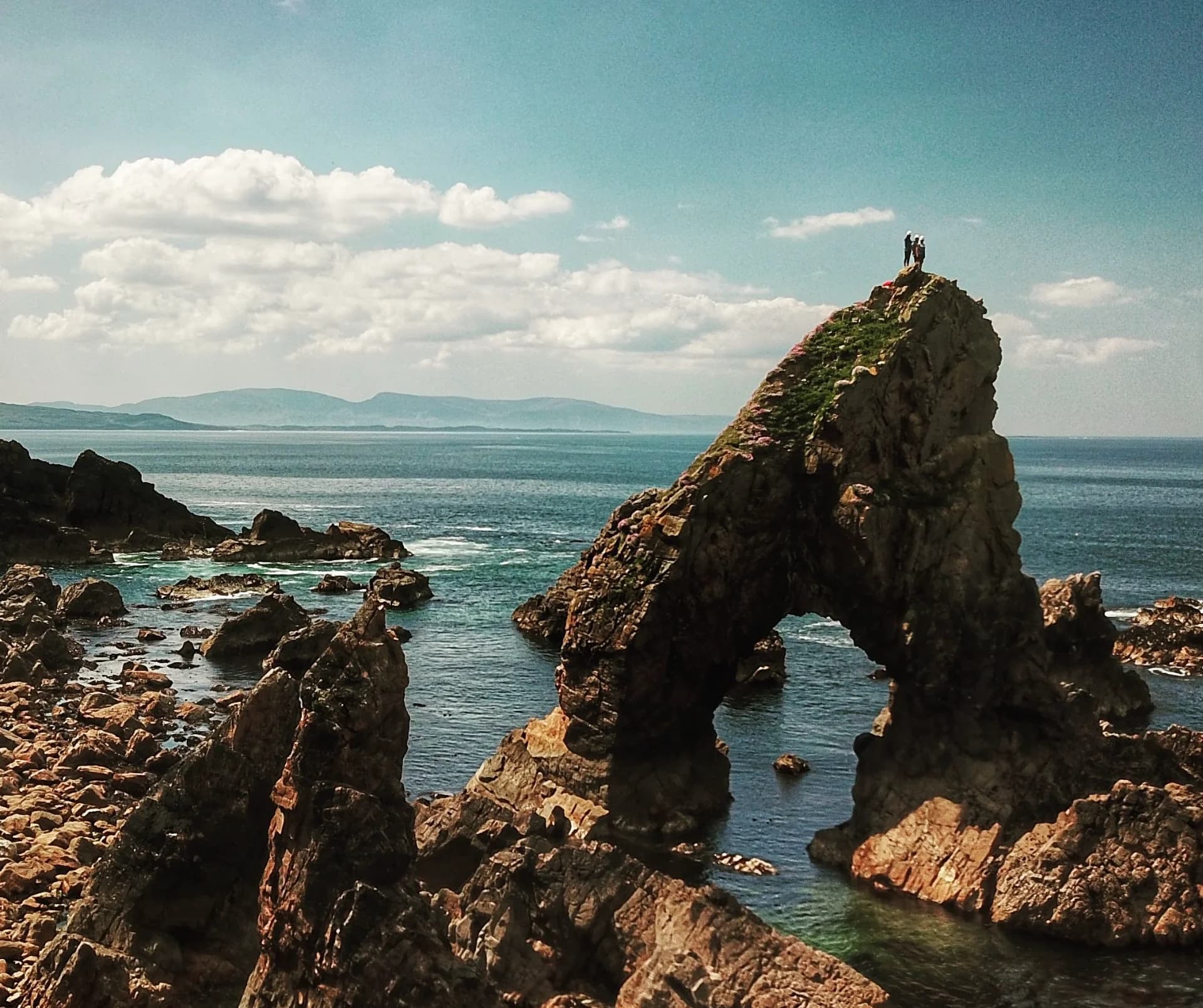
Donegal's famous sea stacks are not just above-water landmarks. Many of them continue below the surface as vertical walls covered in marine growth. Diving beside a stack is like swimming next to a skyscraper of rock. The base is usually deep, the walls are covered in anemones and soft corals, and the light fades to green as you descend.
The sea stacks near Glenlough Bay and the coast around Glencolmcille are known among local divers, though few are documented in guidebooks. That is the Donegal pattern: the best sites are known to the people who launch boats there every week, not to the internet.
Underwater cliffs offer similar drama. Where the coastline drops straight into deep water, you can fin along a wall that goes from the shallows to forty metres or more. These walls act as highways for fish and hunting grounds for seals.

Wreck Diving in Donegal Waters
Donegal has a long history of shipwrecks thanks to its exposed position and busy fishing grounds. Some are well-documented and dived regularly; others are known only from local knowledge and old charts.
One of the better-known sites is the wreck of a naval vessel near Malin Head, though exact identification varies depending on the source. The cold water preserves timber and metal well, so even older wrecks can hold structure and artefacts. As always, wreck penetration should only be attempted by trained divers with the right equipment and a local guide who knows the site.
The challenge with Donegal wrecks is not finding them but understanding them. Many have no buoy, no line, and no chart reference beyond local knowledge. Currents can run across the site, and the wreck may lie deeper than expected. A guide who has dived the wreck before is the difference between a memorable dive and a wasted tank.

Marine Life of the North-West Coast
The north-west Atlantic is not the tropics, but it is far from lifeless. Kelp forests dominate the shallows, providing cover for juvenile fish and crabs. Deeper walls hold plumose anemones, sea urchins, and the occasional squat lobster.
Fish life includes pollack, coalfish, ling, and wrasse. Conger eels hide in cracks and wrecks. Seals are common around the islands, and divers often report curious juveniles that follow them for entire dives. Basking sharks pass through in summer, though they are surface feeders rather than dive attractions.
The real appeal is the setting. The water is green and gold, the rocks are wrapped in kelp, and the animals you see feel like part of a wild coastline rather than a curated reef.

Planning a Donegal Dive Trip
Base yourself in one of the coastal towns: Buncrana for the Inishowen sites, Bunbeg or Gweedore for the western islands, or Burtonport for Arranmore. Each has boat operators, accommodation, and pubs where divers swap stories after the last dive of the day.
Boat charter is the norm for most sites. Shore diving is limited because the best terrain is around headlands and islands. Check the weather obsessively: a calm forecast in the morning can become a small-craft warning by afternoon. Build slack into your itinerary so you can move sites or sit out a day if needed.
Tides matter too. Some sites are only diveable at slack water, and the tidal window in Donegal can be narrow. Your boat operator will set the departure time, not the other way around. If you are used to more predictable Mediterranean diving, this schedule takes some getting used to, but it is part of what keeps the sites wild.
Dry suits are standard here. If you have never dived in a dry suit before, book a pool session or arrive a day early for orientation. The Dry Suit Diving in Ireland: What You Need to Know About Cold Water guide covers the kit in detail.

Why You Need a Local Guide for Diving Donegal
Donegal is not a place to figure out from a map. A local coastal guide or boat operator knows which slipways are usable at low tide, which wrecks lie in which direction, and how to read the swell between islands. They also know the fishermen, the harbour masters, and the unwritten rules of each launch point.
A private driver-guide can help if you are travelling with heavy kit or want to combine diving with sightseeing along the Wild Atlantic Way. Donegal's roads are narrow and its distances deceptive; having someone who knows the route saves hours every day.
You can find both through the Irish Getaways directories. Each guide's profile shows their claimed qualifications, specialities, and reviews from past clients. Contact them directly to discuss your certification level, the sites you want to dive, and the kind of weather window you need.

Frequently Asked Questions
What qualification do I need to dive in Donegal?
Most boat operators expect PADI Advanced Open Water or equivalent, with recent cold-water experience. Some deeper wreck and wall sites require Deep Diver or wreck-penetration certifications. If you are newly qualified, stick to sheltered inshore reefs.
When is the best time to dive Donegal?
May to September offers the best combination of daylight, sea temperature, and settled weather. June and July usually have the calmest seas, while September can bring the best visibility. Winter diving is possible but only for experienced cold-water divers.
Is Donegal diving suitable for beginners?
Some sheltered sites are suitable, but much of Donegal's best diving is exposed Atlantic water with currents and swell. Beginners should dive with an instructor or experienced guide and choose inshore reefs rather than offshore stacks or wrecks.
How do I get to the Donegal dive sites?
Most sites require a boat charter from local harbours. A few shore dives exist around Malin Head and the Donegal Bay coast, but the signature sites are offshore. Book your boat operator in advance, especially in summer.
Conclusion
Donegal offers some of the most dramatic diving in Ireland, but it demands respect. The water is cold, the sites are remote, and the weather makes the rules. With the right guide, the right kit, and a few days of flexibility, you can dive walls and wrecks that feel like the edge of the country.
For other regional dive guides, look at Diving West Cork: Seals, Kelp Forests & the Kowloon Bridge Wreck and Diving Kerry & the Skellig Coast: Underwater Cliffs & Caves. Together they cover the full length of Ireland's Atlantic coast.
Table of Contents
Share this post
More from the Blog

Cork to Blarney Castle Day Trip: The Stone, the Gardens and What Else to See
Plan a Cork to Blarney Castle day trip. Kiss the stone, explore the Poison Garden, and add Cork city, Fota or Kinsale for a full day out.

Cork to Cobh Day Trip: Titanic, Colourful Houses and Harbour History
Plan a Cork to Cobh day trip by train, car or private driver. Explore Titanic history, St Colman's Cathedral, Spike Island and the best harbour views.

Cork to Killarney Day Trip: Lakes, Mountains and Muckross in One Day
A Cork to Killarney day trip is a longer escape into Kerry. Here's how to plan the drive, what to see in Killarney National Park, and why a private driver helps.